
Da Nang has two seasons that matter to a beach trip: a dry, hot stretch from about February to August, and a wet season from September to December. October is the wettest month, with around 580 mm of rain on average, and February the driest, with about 20 mm. For calm sea and warm water, aim for April to August, when the sea sits at 25–29 °C. September to December brings storms and, some years, floods.
January and February are dry but cooler, with highs around 25–27 °C and grey days.
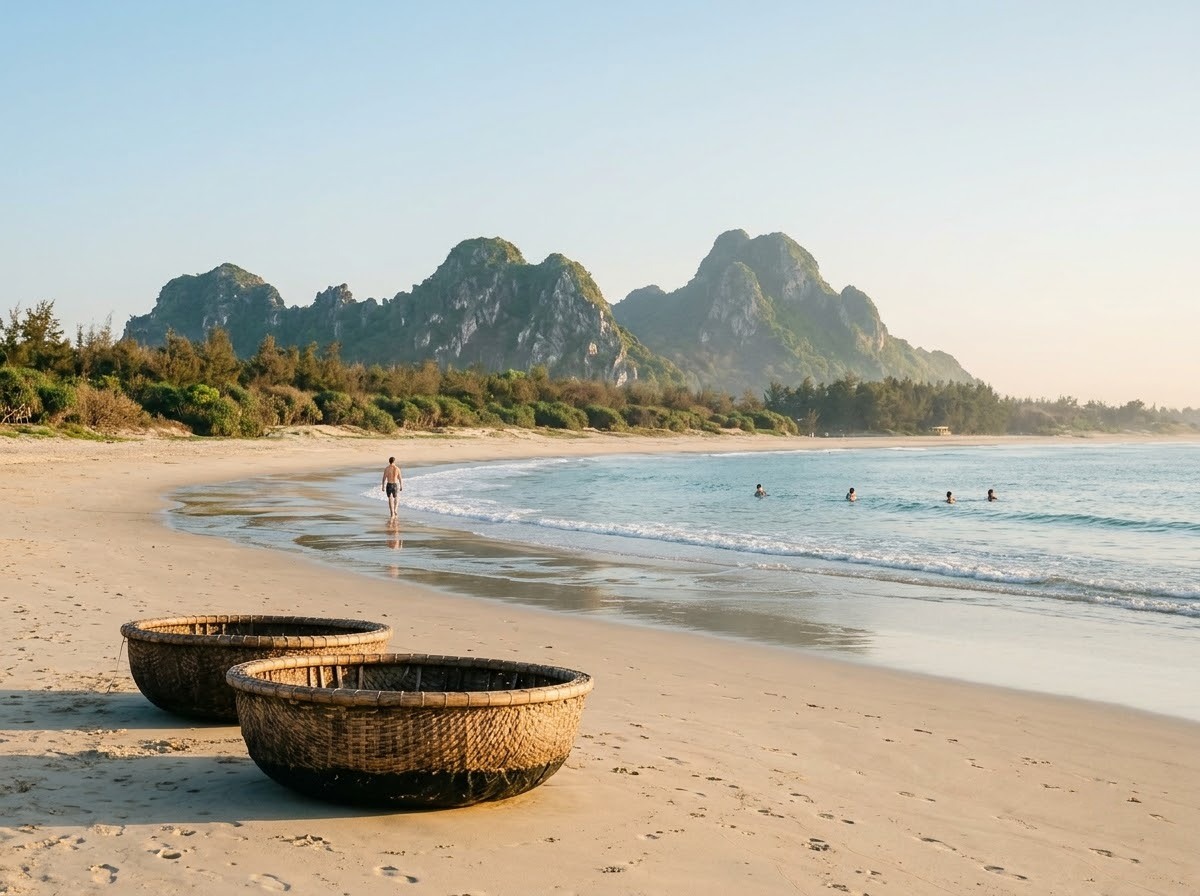
Da Nang weather month by month
The figures below are long-term averages for Da Nang airport, about 12 km from Non Nuoc Beach: 1991–2020 normals for air temperature and rain, and typical sea temperatures. Any single year can be wetter or drier, so read them as odds rather than a promise.
| Month | High / low °C | Rain (mm) | Sea °C | What it means |
|---|---|---|---|---|
| January | 25 / 19 | 79 | 23 | Cool, often grey; sea choppy |
| February | 27 / 20 | 20 | 23 | Driest month; Tet holidays some years |
| March | 28 / 22 | 31 | 23 | Dry and pleasant; water still cool |
| April | 31 / 23 | 48 | 25 | Sea calming; good all-round month |
| May | 34 / 25 | 74 | 27 | Hot, calm sea; short showers |
| June | 35 / 26 | 61 | 29 | Hottest; fireworks festival in 2026 |
| July | 34 / 26 | 91 | 29 | Hot, busy with domestic holidays |
| August | 34 / 26 | 150 | 29 | Hot; more afternoon storms |
| September | 32 / 24 | 363 | 29 | Rain building; first storms |
| October | 29 / 23 | 582 | 28 | Wettest; flood and typhoon risk |
| November | 28 / 22 | 439 | 26 | Heavy rain, rough sea |
| December | 25 / 20 | 234 | 24 | Cooler, still wet early on |
The dry season: February to August
February to April: dry, mild and quiet
Rain drops away in February, and March and April are some of the most comfortable weeks of the year, with highs of 28–31 °C. The sea is still settling after the winter monsoon, so the water can be choppy in February and cool, around 23 °C, until about April. It is a good time for walking the Marble Mountains, which rise about 400 m from KOI Resort Da Nang, before the heat arrives.
May to August: hot, calm and busy
From May the sea is usually flat and the water reaches 27–29 °C, which is why this is peak beach season and peak domestic holiday season. Midday highs of 33–35 °C make sightseeing hard between about 11 am and 3 pm, so plan beach mornings and late-afternoon outings. Short thunderstorms build from August. The city’s International Fireworks Festival ran from 30 May to 11 July in 2026, over six nights, and draws large crowds to the Han River.
The wet season: September to December
Rain climbs from about 150 mm in August to more than 360 mm in September and peaks in October, with about 580 mm on average, before easing to around 230 mm in December. This is also typhoon season along the central coast, and the north-east monsoon brings big waves from October.
What a wet-season week can look like
Most days still have dry spells, but some bring long, heavy rain and a red flag on the beach. In late October 2025 a series of downpours flooded parts of central Vietnam: the river at Hoi An passed its 1964 record level on 30 October, and Da Nang reported 12 deaths and more than US$29 million in damage by 2 November. Not every year is like that, but it is the reason October and November need flexible plans.
Who the wet season suits
Travellers who want lower crowds, cooler days and a resort with indoor options can still enjoy it. At KOI Resort Da Nang the indoor pool on level 2 and the spa, open 09:00–22:00, cover the wettest afternoons; the beach itself is often off limits on rough days.
Swimming safely on Non Nuoc Beach
Da Nang posts lifeguards along the Hoang Sa, Vo Nguyen Giap and Truong Sa beach roads. In summer (15 March to 30 September) they work from about 4:30 am to 7 pm, and in winter (1 October to 14 March) from about 5 am to 6:30 pm, according to the city’s 2025 safety notice. Swim only between the safety buoys while lifeguards are on duty, and never at night.
The calmest water is usually from April to August, early in the morning before the wind picks up. From October onward, rip currents and big swells are common even on sunny days, so treat a red flag or a “no swimming” sign as final.
Planning a stay at Non Nuoc around the weather
A few habits make any month easier. Book refundable rates for September to December, when a storm can change plans at short notice. Do day trips early: the hotel’s free city shuttle leaves at 09:00 and returns at 15:00, which fits the cooler part of a summer day. Keep one indoor afternoon in reserve, and check the forecast the evening before a Ba Na Hills or Hoi An trip, because cloud and rain change both.
For the full picture of pools, the spa and opening hours, see our facilities guide, and for how far everything is, the location guide.
Questions about Da Nang weather
Is October a bad time to visit Da Nang?
October is the wettest month, with about 580 mm of rain on average, and it is the peak of typhoon and flood risk. Many days still have dry spells, but beach days are unreliable and the sea is often rough. Visit if you value quiet and can move plans; avoid it for a short, beach-only trip.
When is the sea warmest in Da Nang?
From June to September, when the water averages about 29 °C. It is already around 27 °C in May and still about 28 °C in October, but by October the waves usually make swimming harder. The coolest water, around 23 °C, is from January to March.
Does it rain all day in the rainy season?
Not usually. Even in October and November most days have breaks, with rain falling in heavy bursts. The problem is the days when a storm system sits over the coast: then it can rain for a day or two without pause, rivers rise and beaches close.
Is January warm enough for the beach in Da Nang?
It is mild rather than hot: highs average about 25 °C and the sea about 23 °C, with grey skies and a choppy sea from the winter monsoon. Walking the beach is pleasant, but most visitors swim in the pool rather than the sea at this time of year.
Read first: Pools, beach and dining · Getting to KOI Resort Da Nang
Climate figures are 1991–2020 averages for Da Nang airport. Lifeguard hours, festival dates and flood reports checked October 2026.